Everyone wanted cheap tickets.
I interviewed a frequent Broadway theatergoer and read through searches, videos and blogs to understand the market and how people use today's ticket apps. Two audiences stood out: regulars (art lovers, artists, performers) and first-timers going for a date or a special occasion.
Even Google's autocomplete pointed the same way: "broadway tickets cheap", "broadway tickets discount". Finding affordable tickets became the working hypothesis, and every round of research confirmed it.
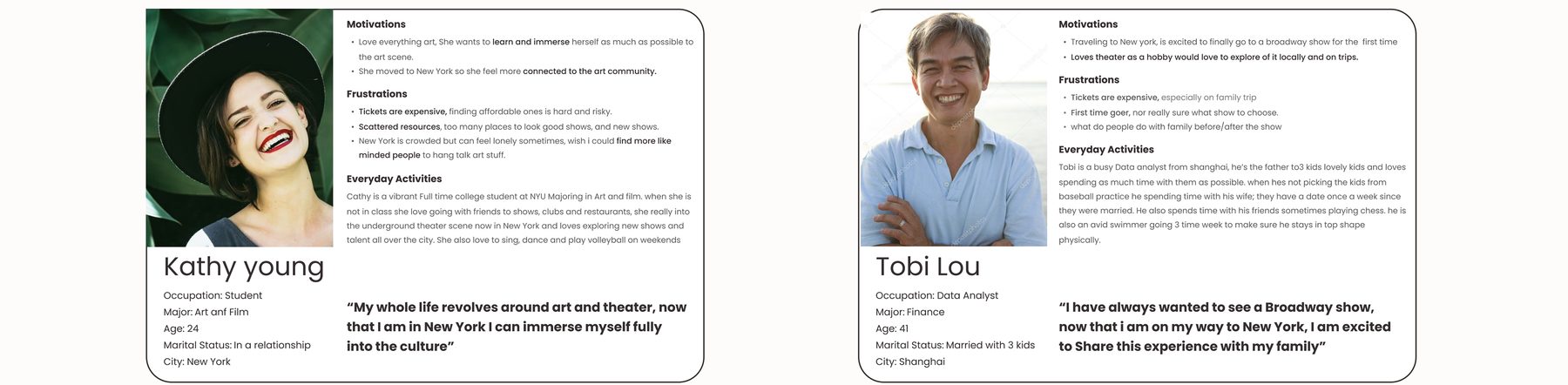
Four problems to solve.
- Expensive tickets and high fees on third-party apps
- What to do before and after the show
- Choosing a show as a newcomer, and discovering new ones as a regular
- Connecting with the cast and with like-minded fans
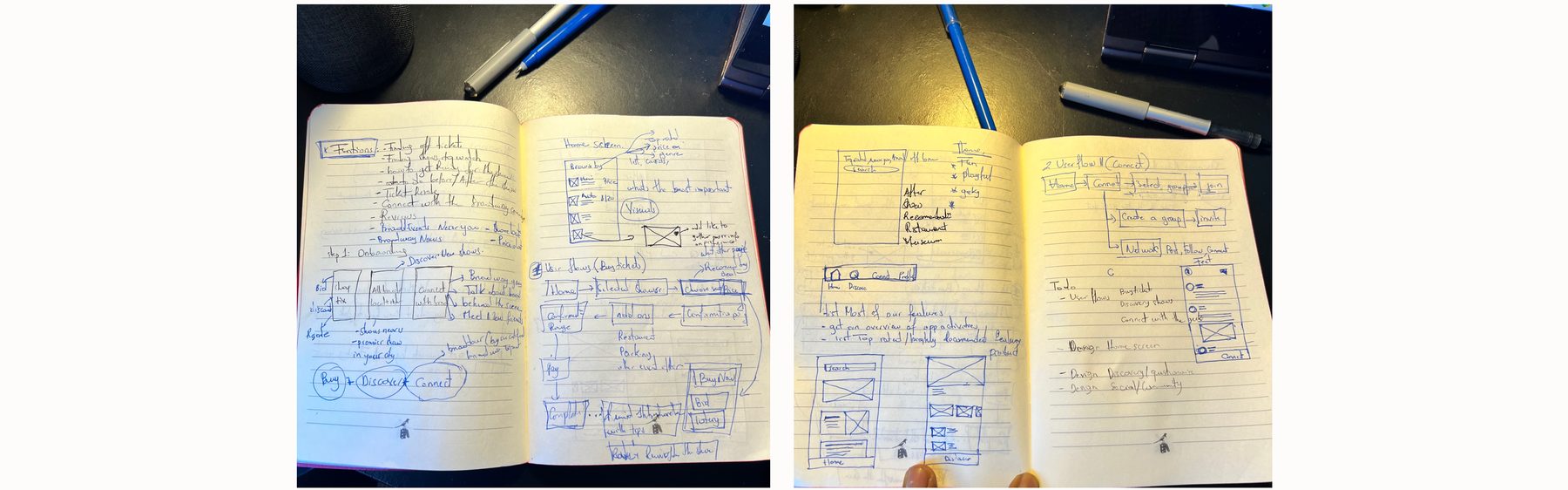
Borrowing from the best.
While sketching, I studied how other apps solved parts of the problem: ticketing flows from Ticketmaster, TKTS and Fandango, dynamic pricing from Google Flights, ads and subscriptions from food delivery apps, reviews and bundles from TripAdvisor, and community features from social networks.

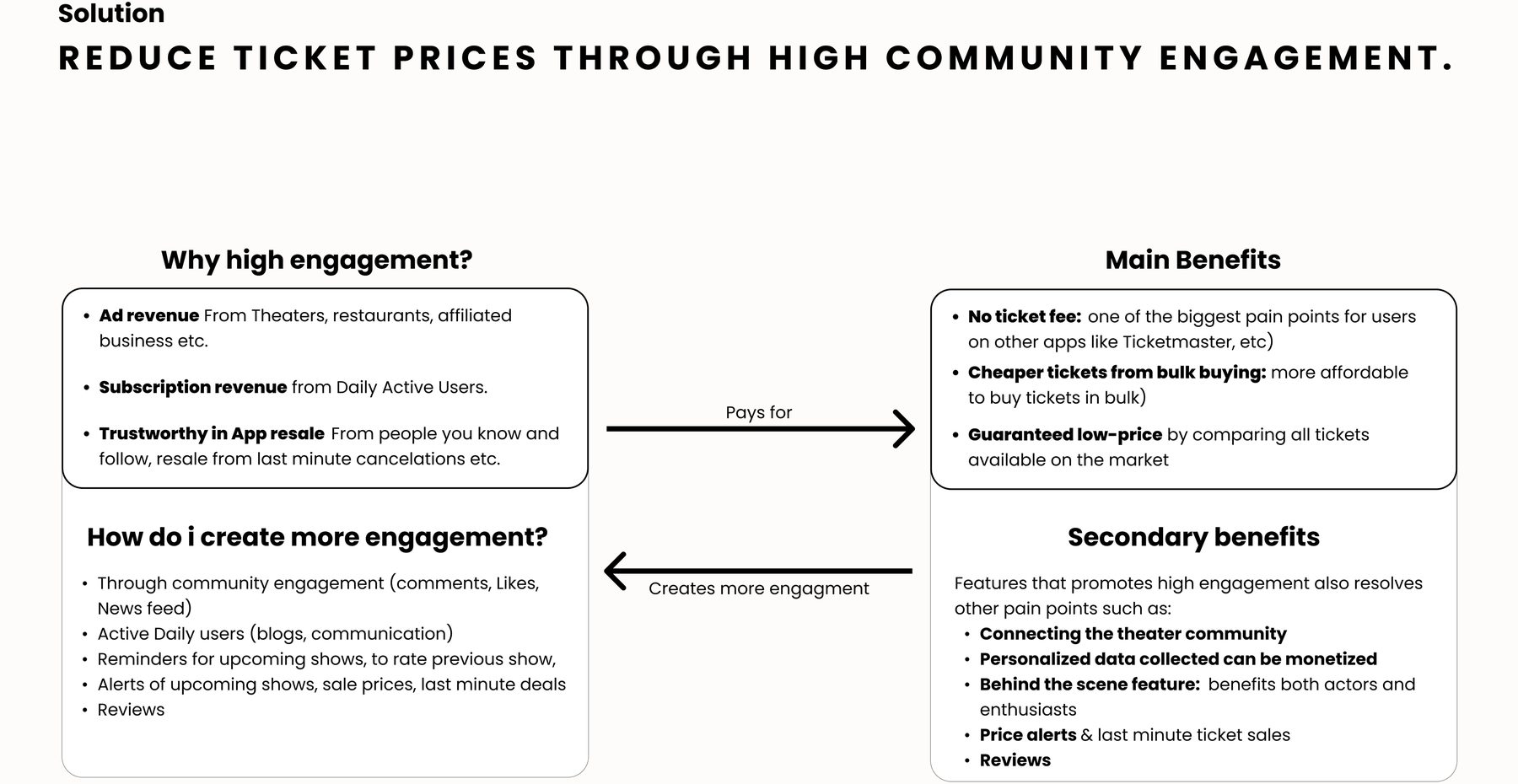
Engagement pays for cheaper tickets.
Instead of charging fees, the app earns from activity: ads from theaters and restaurants, member subscriptions, and trusted resale between people who follow each other. That revenue pays for no ticket fees, cheaper bulk tickets and a guaranteed low price. Those benefits bring people back, which creates more engagement.
Reduce ticket prices through high community engagement.
Three goals, one tab bar.
- Lower prices, no fees: discounts and bundles, price alerts, raffle tickets, member discounts, resale and bidding
- Help choosing a show: a one-time preference quiz, discovery by location, tips to get ready, and things to do nearby
- Connect theatergoers: follow actors, behind-the-scenes content, a news feed, clubs and short acting and dance lessons
Each goal maps to a tab, and the tabs where engagement happens are the ones that earn revenue.

Three flows, mid-fidelity.
Buying tickets. Three ways in: buy now, bid on a reseller's ticket, or enter a flat-fee raffle where you pick a price tier and date and the app picks the show and seats. After purchase, the app keeps you engaged: a reminder, directions, then a prompt to rate the show.
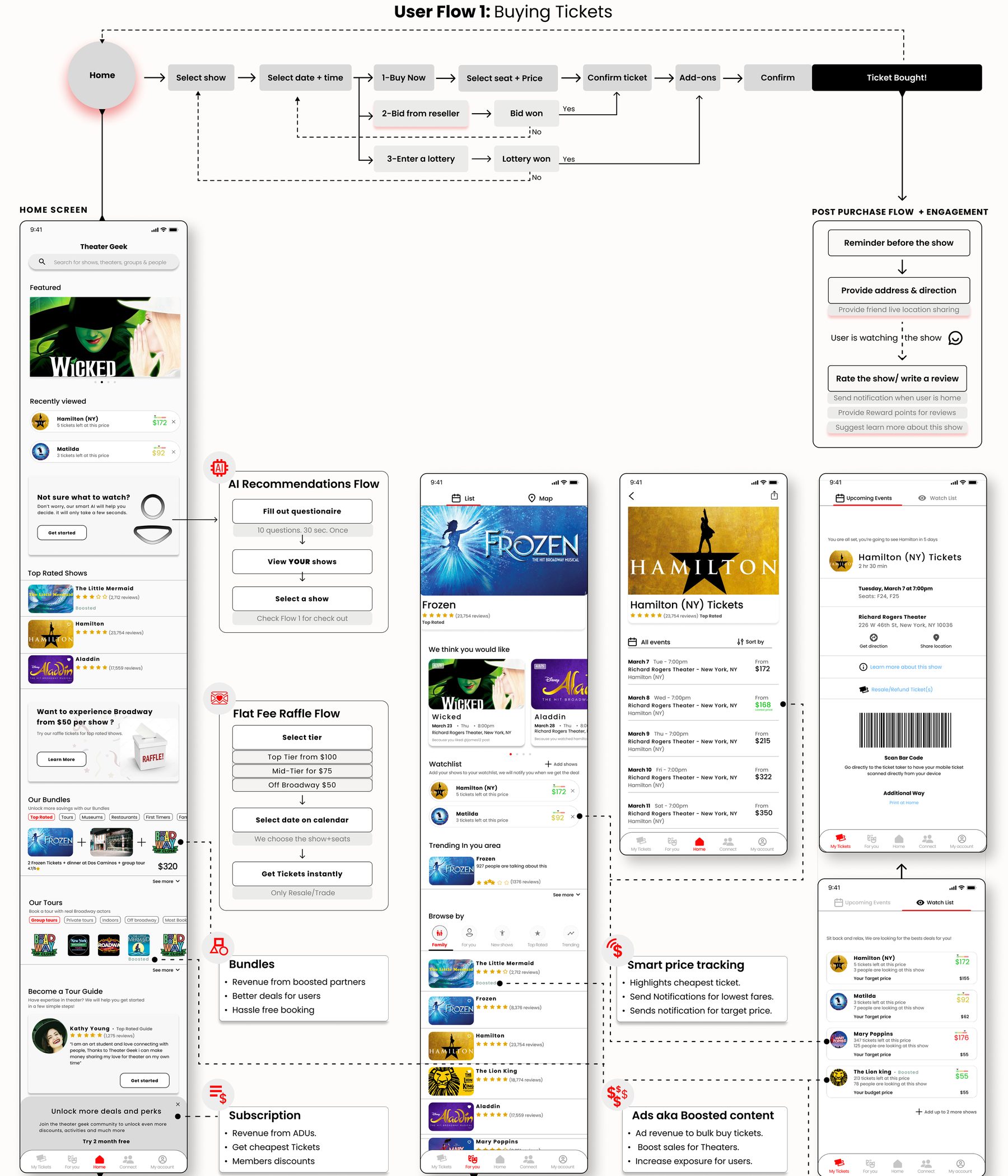
Discovering shows. A 10-question, 30-second quiz, asked only once, powers recommendations. From any show you can buy, save for later or set a price alert.
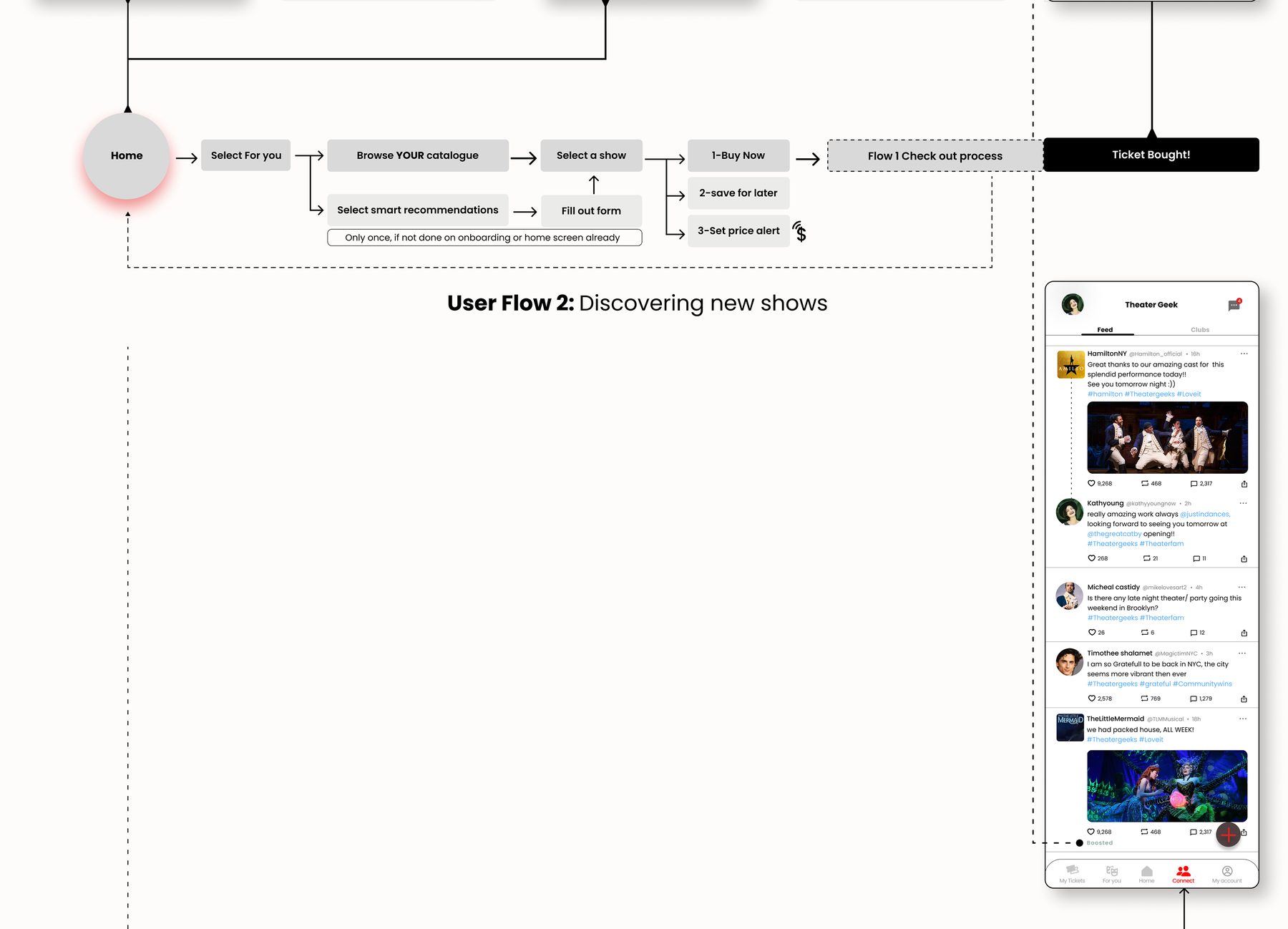
Joining the community. Browse and post in the feed, join paid or free clubs, or start your own.

Try it yourself.
The mid-fidelity prototype is live in Figma.
Open the live prototype